NCCN-protocol care · 96.9% 1-yr breast cancer survival · ArogyaSri, CGHS & cashless insurance accepted · Free second opinion
1800 202 8726
Neuro-Oncology · Hyderabad

Brain Tumor — Types, Symptoms — When to See a Specialist

Brain tumours are an unusual group of conditions — not all are cancer. Many are benign but still serious because of where they grow. Early symptoms can be remarkably subtle: a new morning headache, an unexplained seizure, a slow change in vision or personality. Recognising these signs early is the single biggest factor in outcome.

  • Benign or malignant — every brain tumour deserves specialist evaluation, not just the cancerous ones
  • Multidisciplinary tumour board — every patient reviewed by neuro-oncology, radiation oncology and surgery together
  • Modern imaging & SRS — MRI, stereotactic biopsy, stereotactic radiosurgery, IMRT and IGRT under one roof
  • 45-minute consultation — no rushed decisions, no unnecessary tests, transparent costs
4.8 · 800+ Google reviews · 15,000+ patients treated
Limited Slots Today

Talk to a Neuro-Oncologist

₹950   Today: FREE  ·  Including free written second opinion

Free written second opinion
NABH-accredited centres across Hyderabad
Confidential. No commitment to start treatment.
or
Call 18002028726
17+
Cancer Specialists
on Panel
96.9%
Breast Cancer
Survival Rate*
15,000+
Patients
Treated
4.8★
Google Rating
(800+ reviews)
Introduction

What is a Brain Tumor?

A brain tumour is any abnormal growth of cells inside the skull or in the membranes covering the brain. Brain tumours are divided into two broad groups: primary brain tumours, which start in the brain or its surrounding tissue, and secondary (metastatic) brain tumours, which have spread to the brain from a cancer elsewhere in the body — most commonly lung, breast, kidney, colon or melanoma. Secondary brain tumours are several times more common than primary ones in adults.

A critical point that surprises many patients is that not every brain tumour is cancerous. Meningiomas, pituitary adenomas and many other primary brain tumours are benign — they do not invade nearby tissue or spread elsewhere. But because the skull is a closed space, even a benign tumour can cause serious symptoms by pressing on critical brain structures. This is why the right framing is brain tumour rather than brain cancer, and why every brain tumour deserves a careful specialist evaluation — benign or otherwise.

Types

Types of Brain Tumor

Brain tumours are classified by where they begin and the type of cell they arise from. The most common primary and secondary types include:

Most common malignant

Gliomas (including Glioblastoma)

The most common group of malignant primary brain tumours, arising from the supportive glial cells of the brain. Includes low-grade gliomas (slower growing), anaplastic astrocytoma, and glioblastoma multiforme (the most aggressive form). Treatment combines surgical resection, radiation therapy and chemotherapy, with newer targeted and immunotherapy approaches in selected cases.

Most common benign

Meningiomas

The most common benign primary brain tumours, arising from the membranes (meninges) covering the brain. Most meningiomas grow slowly and are cured by surgery alone, with radiation reserved for cases that cannot be completely removed or recur.

Hormonal

Pituitary Adenomas

Tumours of the pituitary gland at the base of the brain. The great majority are benign but can cause hormonal disturbances or pressure-related symptoms such as vision changes. Treatment may be surgical (often through the nose), medical (with hormone-blocking drugs), or radiation, depending on the type.

Hearing nerve

Acoustic Neuromas (Vestibular Schwannomas)

Benign tumours of the nerve that connects the inner ear to the brain. Often present with one-sided hearing loss, ringing in one ear, or balance problems. Treated with observation, stereotactic radiation, or microsurgery.

Paediatric

Medulloblastoma & Other Paediatric Brain Tumours

Medulloblastoma is the most common malignant paediatric brain tumour, primarily affecting young children. Treatment combines surgery, radiation and chemotherapy. Other paediatric brain tumours include ependymomas, craniopharyngiomas and brainstem gliomas.

Rare · immune cells

Lymphomas of the Brain (Primary CNS Lymphoma)

A rare cancer of the immune cells within the brain, often seen in older adults or in immunosuppressed patients. Treated primarily with chemotherapy, sometimes combined with radiation.

Most common in adults

Secondary (Metastatic) Brain Tumours

Cancers that have spread to the brain from another organ — most commonly lung, breast, kidney, colon or melanoma. Several times more common than primary brain tumours in adults. Treatment focuses on systemic therapy for the primary cancer, combined with stereotactic radiosurgery, whole-brain radiation, or neurosurgery for accessible lesions.

For detailed information on diagnosis, microsurgery, stereotactic radiosurgery, advanced radiation therapy and systemic therapy options, see our dedicated page on brain tumor treatment in Hyderabad.

Warning signs

Common Signs & Symptoms of Brain Tumor

Brain tumour symptoms depend heavily on where in the brain the tumour grows. Common warning signs include:

  • A new persistent headache that is worse in the morning or wakes you from sleep
  • A headache that gets steadily worse over weeks, or that does not respond to standard treatment
  • New seizures (fits) in an adult who has never had them before
  • Nausea or vomiting, particularly in the morning, often without an obvious cause
  • Unexplained weakness or numbness on one side of the body or in one limb
  • Changes in vision — blurring, double vision, or loss of part of the visual field
  • Changes in speech, understanding, or in the ability to find the right words
  • Difficulties with balance, coordination, or walking
  • Memory problems, confusion, or a noticeable change in personality or behaviour
  • One-sided hearing loss or persistent ringing in one ear
  • Hormonal symptoms — unexplained changes in periods, growth, or thirst (suggesting a pituitary tumour)

Worried about a new persistent headache or seizure?

Speak to a CION neuro-oncologist. Free first consultation, including a written second opinion on existing MRI/CT reports.

or
Call 18002028726

By submitting, you consent to be contacted by CION about your enquiry.

12+ Centres in Hyderabad · Pick yours

CION cancer care is closer than you think.

We're never more than 30 minutes away. Same panel of specialists at every centre. Same tumour board reviews. Same NCCN protocols. Pick the closest one and call directly — or let us pick for you.

Not sure which centre fits best? Tell us where you are — we'll suggest the closest one with the right specialists.

Help me pick the right centre
Meet the Specialists

17+ senior cancer specialists. One panel for your case.

Trained at AIIMS, Tata Memorial, and leading international centres. Combined 150+ years of experience. Every complex case is reviewed by 3+ of them — together.

Dr. Naresh Gundu
Medical Oncologist

Dr. Naresh Gundu

MBBS, DNB (Internal Medicine), DM (Medical Oncology)

View Profile
Dr. C. Raghavendra Reddy
Medical Oncologist

Dr. C. Raghavendra Reddy

MBBS(Gold Medal), DNB(General Medicine), DM(Medical Oncology)(Gold Medal)

View Profile
Dr. Bharati Devi Gorantla
Medical Oncologist

Dr. Bharati Devi Gorantla

MBBS, MD(General Medicine), DM(Medical Oncology)(Adyar,Chennai), ECMO, MRCP SCE(UK)

View Profile
Dr. Owais Mohammed
Medical Oncologist

Dr. Owais Mohammed

MBBS, MD (General Medicine), DrNB (Medical Oncology), ECMO, MRCP SCE (Medical Oncology) (UK)

View Profile
Dr. T. Raghavender Reddy
Medical Oncologist

Dr. T. Raghavender Reddy

MBBS, DM (Medical Oncology), MD (Radiation Oncology)

View Profile
Dr. N. Kiranmayee
Medical Oncologist

Dr. N. Kiranmayee

MBBS, DM (Medical Oncology), MD (Internal Medicine)

View Profile
Dr. Muralidhar Muddusetty
Surgical Oncologist

Dr. Muralidhar Muddusetty

MBBS (AIIMS), MS (Surgery) (AIIMS), DNB (Surgical Oncology), MRCS (Edinburgh)

View Profile
Dr. Raghavendra Naik
Surgical Oncologist

Dr. Raghavendra Naik

MBBS, MS (General Surgery), M.Ch (Surgical Oncology)

View Profile
Dr. Mohammed  Imaduddin
Surgical Oncologist

Dr. Mohammed Imaduddin

M.B.B.S, MS (General Surgery), M.Ch (Surgical Oncology)

View Profile
Dr. Vinay Mamidala
Surgical Oncologist

Dr. Vinay Mamidala

MBBS, MS(General Surgery), M.Ch(Surgical Oncology), FMAS, FARIS(Ongoing)

View Profile
Dr. Paila Gowri Naidu
Surgical Oncologist

Dr. Paila Gowri Naidu

MBBS, MS (General Surgery), M.Ch (Surgical Oncology), FMAS

View Profile
Dr. Venkata Sushma P
Radiation Oncologist

Dr. Venkata Sushma P

MBBS, MD (Radiation Oncology)

View Profile
Dr. Kirti Ranjan Mohanty
Radiation Oncologist

Dr. Kirti Ranjan Mohanty

MBBS, MD (Radiation Oncology)

View Profile
Dr. Gangadhar Vajrala
Radiation Oncologist

Dr. Gangadhar Vajrala

MBBS, MD (Radiation Oncology), MPH

View Profile
Dr. Basudev Pokhrel
Hematologist

Dr. Basudev Pokhrel

MBBS, M.D (Immunohematology & Blood Transfusion)

View Profile
Dr. Mohammed Imran
Interventional Radiologist

Dr. Mohammed Imran

View Profile
Dr. Vajja Sandeep Kumar
Surgical Oncologist

Dr. Vajja Sandeep Kumar

MBBS, MS (General Surgery), DrNB (Surgical Oncology), FALS Oncology

View Profile
Dr. Sridhar Kamani
Surgical Oncologist

Dr. Sridhar Kamani

MBBS, MS (General Surgery), DrNB (Surgical Oncology)

View Profile

Want a specific doctor for your case? Mention them when booking.

Book Free Consultation

A New Headache, Seizure, or MRI Finding Deserves a Specialist

Brain tumour outcomes — benign or malignant — depend on early specialist review. Get a free 45-minute consultation with CION's neuro-oncology team.

Regional context

Brain Tumor in Telangana & Andhra Pradesh

Brain tumours, both primary and secondary, are diagnosed routinely across Telangana and Andhra Pradesh, but the patient journey is often delayed because early symptoms — persistent headache, subtle behavioural change, mild weakness — are easily attributed to stress, migraine, or normal ageing. The widespread availability of MRI in major centres including Hyderabad means that brain tumours can now be detected far earlier than was previously possible, provided the patient is referred for imaging.

Anyone with a new persistent headache pattern, new-onset seizures in adulthood, or unexplained one-sided weakness deserves a neurological examination and almost always an MRI brain scan. For patients with known cancer elsewhere, the threshold for brain imaging should be even lower — secondary brain tumours are now treatable with stereotactic radiosurgery and modern systemic therapy with meaningfully improved outcomes.

Causes

Common Causes & Risk Factors

The cause of most brain tumours is not identifiable. Known risk factors include:

  • Previous radiation therapy to the head
  • Inherited cancer syndromes such as neurofibromatosis (NF1 and NF2), tuberous sclerosis, Li-Fraumeni syndrome, Turcot syndrome and Von Hippel-Lindau disease
  • A weakened immune system — HIV infection, organ transplant medications, long-term steroid use (raises risk of CNS lymphoma)
  • A family history of brain tumour or related cancer syndromes
  • Age — gliomas and meningiomas are more common in older adults; medulloblastoma is primarily a childhood cancer
  • Female sex (for meningiomas)
  • A history of cancer elsewhere (for secondary brain tumours)

Worried about your risk?

A 45-minute consultation with a CION neuro-oncologist costs nothing and clears most questions.

or
Call 18002028726
Red flags

When to See a Brain Tumor Specialist

See a neuro-oncologist or neurologist promptly if you notice any of the following:

  • A new persistent headache, especially one that wakes you from sleep or is worse in the morning
  • A headache that gets progressively worse over weeks
  • A first-ever seizure in adulthood
  • New weakness, numbness, or coordination problems on one side of the body
  • A change in vision, speech, balance, memory, or personality
  • Unexplained one-sided hearing loss or persistent ringing in one ear
  • A new hormonal disturbance with vision changes (suggesting a pituitary tumour)
  • Any new neurological symptom in someone with a known cancer elsewhere

A short specialist consultation and the right diagnostic test — imaging, endoscopy, biopsy, or blood test as appropriate — is usually enough to confirm or rule out cancer. Early action is always easier than catching up later.

Specialist care

Specialist Brain Tumor Care at CION Cancer Clinics

Our NABH-accredited centres across Hyderabad deliver evidence-based brain tumor care — from MRI imaging and stereotactic biopsy through to microsurgical resection, awake craniotomy, advanced radiation therapy (IMRT/IGRT/SRS), stereotactic radiosurgery, chemotherapy and targeted therapy — guided by NCCN and EANO protocols and reviewed for every patient by a multidisciplinary neuro-oncology tumour board.

For a detailed walk-through of brain tumor diagnosis, treatment options, costs, and our specialist team, see our dedicated page on brain tumor treatment in Hyderabad.

Real Patients · Real Outcomes

Brain Tumor Care, Walked With You

From the first MRI to the last follow-up, our neuro-oncology team walks this journey with you — tumour board for every patient, decisions for healing, not billing.

Real Stories. Real Voices.
15,000+ patients chose CION. Hear from them directly.
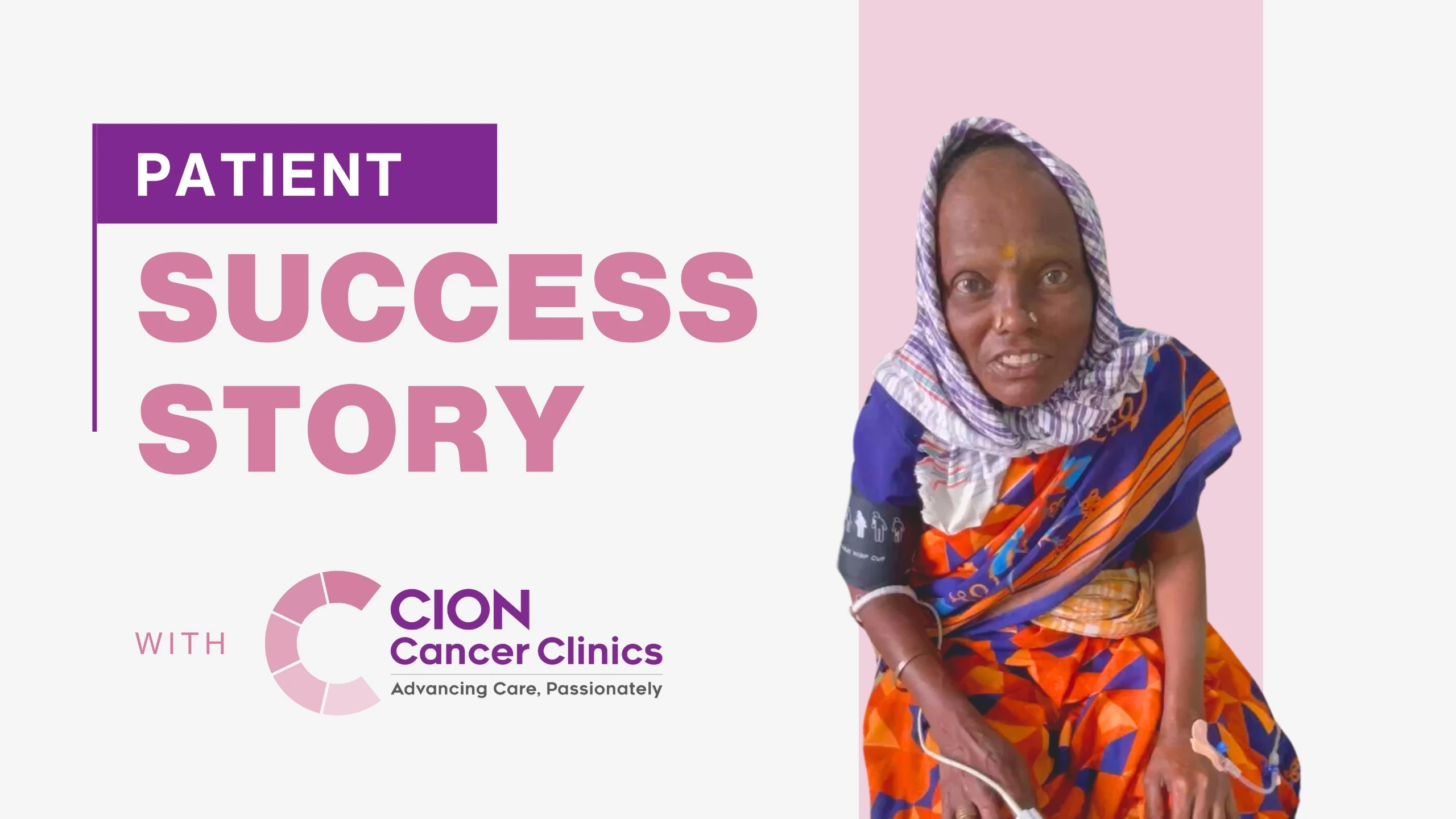
These aren't paid endorsements or written reviews. These are video testimonials from real patients and families — recorded on their own phones, in their own words. Pick any one. Watch it. Then decide.

4.8★800+ Google reviews
50+video testimonials
15,000+patients treated
Successful Chemotherapy Done by Dr. C Raghavendra Reddy

Successful Chemotherapy Done by Dr. C Raghavendra Reddy

Watch video →
Surgery, Chemo & Radiation Done by  Dr. Imaduddin, Dr. Vinay, Dr. Owais, Dr. Kirti

Surgery, Chemo & Radiation Done by Dr. Imaduddin, Dr. Vinay, Dr. Owais, Dr. Kirti

Watch video →
 Successful Radical Thymectomy Done by  Dr. Mohammed Imaduddin & Dr. Vinay Mamidala

Successful Radical Thymectomy Done by Dr. Mohammed Imaduddin & Dr. Vinay Mamidala

Watch video →
Successful Surgery Done  by Dr. Rajender Byshetty

Successful Surgery Done by Dr. Rajender Byshetty

Watch video →
Successful Chemo & Surgery Done by  Dr. Imad, Dr. Vinay, Dr. Owais & Dr. Raghavendra

Successful Chemo & Surgery Done by Dr. Imad, Dr. Vinay, Dr. Owais & Dr. Raghavendra

Watch video →
Successful Chemo & Surgery Done by  Dr. Imad, Dr. Vinay, Dr. Owais & Dr. Raghavendra

Successful Chemo & Surgery Done by Dr. Imad, Dr. Vinay, Dr. Owais & Dr. Raghavendra

Watch video →
Successful Chemo & Radiation Done by Dr. Owais Mohammed & Dr. Kirti Ranjan Mohanty

Successful Chemo & Radiation Done by Dr. Owais Mohammed & Dr. Kirti Ranjan Mohanty

Watch video →
Successful Breast Cancer Surgery Done by Dr. Imaduddin Mohammed & Dr. Vinay Mamidala

Successful Breast Cancer Surgery Done by Dr. Imaduddin Mohammed & Dr. Vinay Mamidala

Watch video →
Successful Chemotherapy Done by Dr. Bharati Devi Gorantla

Successful Chemotherapy Done by Dr. Bharati Devi Gorantla

Watch video →
Successful Chemo & Surgery Done by Dr. Owais Mohammed & Dr. Imaduddin Mohammed

Successful Chemo & Surgery Done by Dr. Owais Mohammed & Dr. Imaduddin Mohammed

Watch video →
Successful Chemotherapy Done by Dr. Gundu Naresh

Successful Chemotherapy Done by Dr. Gundu Naresh

Watch video →
Successful Bone Marrow Transplantation - Neuroblastoma

Successful Bone Marrow Transplantation - Neuroblastoma

Watch video →
Successful Surgery & Chemo - Carcinoma of Caecum

Successful Surgery & Chemo - Carcinoma of Caecum

Watch video →
Successful Oral chemotherapy & mastectomy surgery

Successful Oral chemotherapy & mastectomy surgery

Watch video →
Successful Oral chemotherapy & mastectomy surgery

Successful Oral chemotherapy & mastectomy surgery

Watch video →
Successful Chemotherapy

Successful Chemotherapy

Watch video →
Successful Surgery by Dr. Mohammed Imaduddin

Successful Surgery by Dr. Mohammed Imaduddin

Watch video →
Successful Bone Marrow Transplantation

Successful Bone Marrow Transplantation

Watch video →
Successful Oral chemotherapy & mastectomy surgery

Successful Oral chemotherapy & mastectomy surgery

Watch video →
Successful Oral chemotherapy & mastectomy surgery

Successful Oral chemotherapy & mastectomy surgery

Watch video →
Successful Chemotherapy

Successful Chemotherapy

Watch video →
Successful Buccal Mucosa Surgery

Successful Buccal Mucosa Surgery

Watch video →
Successful Complex Surgery Mandibulectomy Reconstruction

Successful Complex Surgery Mandibulectomy Reconstruction

Watch video →

Disclaimer: This page is intended for general informational purposes only and does not constitute medical advice, diagnosis, or treatment. Always consult a qualified oncologist for guidance specific to your medical condition. Content on this page is periodically reviewed and updated by CION's medical team in accordance with current clinical guidelines.

Common questions

Brain Tumor — Frequently Asked Questions

What is the first sign of a brain tumor?

The most common first sign is a new persistent headache — often worse in the morning, sometimes waking the person from sleep, and gradually worsening over weeks. Other early signs include a first-ever seizure in adulthood, unexplained weakness or numbness on one side, vision changes, speech difficulties, or a noticeable change in personality or behaviour. The unifying theme is something new and persistent — a headache pattern you have never had before, or a neurological symptom that does not settle, deserves imaging.

Are all brain tumors cancer?

No. Many brain tumours are benign — meningiomas, pituitary adenomas, acoustic neuromas, and many others. Benign tumours do not invade nearby tissue or spread elsewhere in the body. However, because the skull is a closed space, even a benign brain tumour can cause serious symptoms by pressing on critical brain structures. This is why every brain tumour deserves a careful specialist evaluation — and why the right term is brain tumour rather than brain cancer.

Is brain tumor curable?

It depends on the type. Many benign brain tumours — including most meningiomas, pituitary adenomas, and acoustic neuromas — are completely curable with surgery alone, or with surgery combined with stereotactic radiosurgery. Some low-grade gliomas can be controlled for many years with treatment. The most aggressive primary brain tumour, glioblastoma, remains difficult to cure but newer combination treatments, targeted therapy, and tumour-treating fields are meaningfully improving survival. Secondary brain tumours, while rarely curable, can often be controlled for extended periods with modern stereotactic radiosurgery and systemic therapy.

What is the difference between a brain tumor and brain cancer?

The term brain tumour covers any abnormal growth of cells inside the skull — whether benign or malignant. The term brain cancer refers only to malignant brain tumours, which grow more rapidly, invade nearby brain tissue, and behave aggressively. Many brain tumours, including most meningiomas and pituitary adenomas, are technically not cancer — they are benign tumours that still need treatment because of where they grow. This distinction matters because treatment and prognosis differ significantly.

Who is at higher risk of brain tumors?

People with a history of radiation therapy to the head, those with inherited cancer syndromes such as neurofibromatosis, tuberous sclerosis, or Li-Fraumeni syndrome, individuals with weakened immune systems (raising the risk of CNS lymphoma), and people with cancer elsewhere (raising the risk of secondary brain tumours) are at higher risk. Age also matters — gliomas and meningiomas are more common in older adults, while medulloblastoma is primarily a childhood cancer.

Call now Book free consultation